Architecture

Bosh sahifa Architecture

Architecture


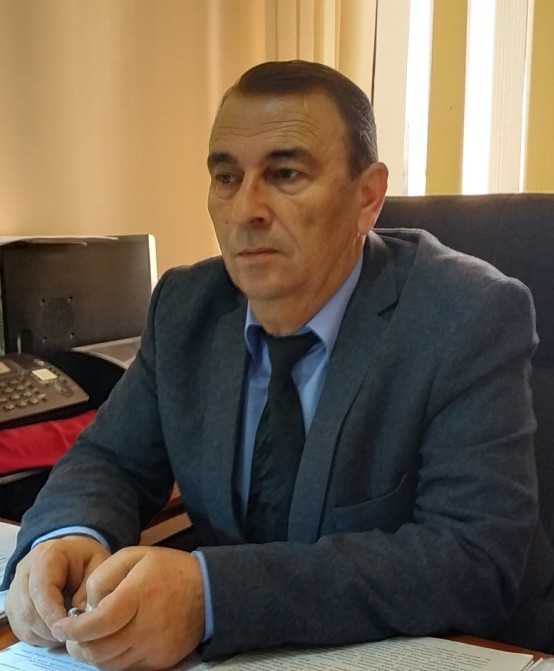
Head of the department

Shamsiddin Rajabovich Mirzayev

  • Qabul vaqti: Monday to Friday (from 14:00 to 16:00)
  • Telefon: +998 91 014 02 59
  • Email: mirzaev.shamsiddin@mail.ru

Arxitektura

    During his visit to Bukhara region on July 13–14, 2007, the first President of the Republic of Uzbekistan, I.A. Karimov, while observing the buildings and structures under construction in the city of Bukhara, emphasized that the city has a very long history and, accordingly, should have its own distinctive appearance. He expressed his views on the necessity of thoroughly studying cultural heritage sites and considering national characteristics and local conditions when designing and constructing buildings and structures. In April 2008, during his subsequent visit to Bukhara region, the President of the Republic gave instructions to organize the training of specialists locally in Bukhara who would understand, preserve, and develop the national architectural heritage and be able to design modern buildings and structures in harmony with it. In order to implement the President's instructions, the Ministry of Higher and Secondary Specialized Education of the Republic of Uzbekistan issued Order No. 120 on May 2, 2008, "On the Establishment of the Faculty of Architecture and Construction within the Bukhara Institute of Food and Light Industry Technology," and later, on August 12, 2008, Order No. 242 of the Ministry, "On the Development of the Activities of the Faculty of Architecture and Construction of the Bukhara Institute of Food and Light Industry Technology," was issued. Based on these orders, the Faculty of Architecture and Construction was established within the Bukhara Institute of Food and Light Industry Technology, and the "Architecture" educational program was launched. From the 2008–2009 academic year, student admissions to the "Architecture" program began. According to the decision of the extended meeting of the Institute’s Academic Council on August 29, 2009, No. 1, the "Architecture" Department was established within the Faculty of Architecture and Construction, and the "Architecture" educational program was assigned to the department. Currently, the department has 20 academic staff members, including 1 Doctor of Science and Professor, 4 Candidates of Science (PhDs) and Associate Professors, 5 senior lecturers, and 3 assistants. The department offers 2 educational programs and has 34 subjects assigned to it.


Head of Department: PhD in Technical Sciences
Mirzayev Shamsiddin Rajabovich


Doctor of Technical Sciences
Vakhitov Mubin Muminovich


Candidate of Technical Sciences
Roziyev Hoshim Roziyevich


Candidate of Technical Sciences
Nigmatullayev Bohodir Nurullayevich


Senior Lecturer
Rabiyev Gayrat Botirovich


Senior Lecturer
Khudayberdiyev Mehriddin Mardanovich


Senior Lecturer
Sulaymonova Maqsuda Nodirovna


Doctor of Philosophy (PhD) in Architecture
Jo’rayev Murodjon Ulug’bekovich


Senior Lecturer
Shokirov Yunus Mamatovich


Department Assistant
Mukhammadov Said Karimovich

Department Assistant
Usmonov Erkin Toyirovich


Intern
Toshev Jo’rabek Toyirovich


Teaching Intern
Boboyeva Madina Shamsiddinovna


Teaching Intern
Rakhmonov Gayrat Fazliddinovich

Teaching Intern
Fozidova Mavjuda Jamilovna


Teaching Intern
Bobomurotov Hamza Halimovich


Teaching Intern
Khaitov Sunnat Istamovich


Head of Department Office
Baqoyeva Shakhnoza Shuhratovna

Head of Department Office
Ergashova Gulsanam Ergashovna

BACHELOR’S DEGREE

1. 60730100 – Architecture (by specializations)
2. 60730800 - Reconstruction and Restoration of Architectural Monuments
3. 60730500 - Design and Operation of Water Supply and Sewerage Systems


MASTER’S DEGREE

1. 5A340101 - Architecture of Buildings and Structures.
2. 70730103 - History and Theory of Architecture


Doctoral Study Program

18.00.01 - “Theory and History of Architecture. Repair and Restoration of Architectural Monuments.” In this specialty, 5 professors and lecturers of the department have successfully defended their dissertations, and 4 more professors and lecturers are scheduled to defend

18.00.02 - “Regional Planning. Urban Planning. Planning of Rural Residential Areas. Landscape Architecture. Architecture of Buildings and Structures”

  1. 1. Fundamentals of Architectural Composition and Design
    2. Architectural Drawing, Painting, and Sculpture
    3. Architectural Design
    4. Design of Residential and Public Buildings
    5. Urban Planning and Landscape Design
    6. Typology of Buildings and Structures
    7. Transport and Engineering Infrastructure
    8. Interior Design and Equipment
    9. Model Making
    10. Digital Design (Auto CAD, Sketch UP, Revit)
    11. Engineering Systems of Buildings
    12. Repair and Restoration of Architectural Monuments
    13. Fundamentals of Energy-Efficient and Energy-Saving Building Design
    14. District Planning and Design
    15. Architectural Heritage of Uzbekistan

Photographs from scientific research work

Textbooks and Study Guides

Mirzayev, Shamsiddin Rajabovich. CENTRAL ASIAN JOURNAL. Innovative Technical Solutions in the Design of Modular Residential Buildings. Volume 3 (2022), pp. 2–4. Ro’ziyev, Hoshim. International Journal on Integrated Education (IJIE). Evolution of Mass Public Buildings and Complexes: Problems of Modern Spatial Organization in Bukhara. Volume 5, No. 2 (Feb 2022), pp. 63–73. Ro’ziyev, Hoshim. An International Multidisciplinary Research Journal. Genesis and Evolution of the City of Bukhara. Vol. 11, Issue 12, pp. 910–913. Xayitov, Sunnatjon Istamovich. International Journal on Integrated Education (IJIE). Evolution of Mass Public Buildings and Complexes: Problems of Modern Spatial Organization in Bukhara. Volume 5, No. 2 (Feb 2022), pp. 63–73. Tog’boyev, Xushnud Iskandarovich. An International Multidisciplinary Research Journal. Genesis and Evolution of the City of Bukhara. Volume 2, Issue 5, May 2022, pp. 502–506. Rabiyev, G‘ayrat Botirovich. Web of Scientist: International Scientific Research Journal. The Place of the Archaeological Monument of the Settlement of Varakhsha in the Study of the Material Culture of Zarafshan. Volume 3, Issue 3, March. Toshev, Jo‘rabek Toyir o‘g‘li. International Engineering Journal for Research & Development. Vol. 6, Issue 6, December 2021, pp. 609–613. Usmonov, Erkin Toxirovich. International Engineering Journal for Research & Development. Medieval Bath of Ancient Bukhara. Vol. 6, Issue 6, December 2021, pp. 550–556.

In order to teach KNAUF technologies to students of the educational program, a contract has been concluded with the Uzbek-German joint venture IP LLC “KNAUF GIPS BUKHARA”.
Cooperative relations have been established with the Main Department of Construction and Housing and Communal Services of Bukhara Region, and training has been organized in the form of DUAL education.
A Cooperation Agreement dated 07.09.2017, No. 369-193/07, has been concluded between BMTI and Moscow State University of Civil Engineering (NRU MGSU), Russia, along with a joint action plan for 2017–2025. Professional development of faculty members, internships, and student exchange programs have been established with one of the leading construction universities of Russia.
Cooperation of the Department with foreign educational institutions:
1. Leading professors and specialists of the University of Potsdam (Germany): Jörg Roder, Steffan Laue, and Volker Bley.
2. Participation in the “Restoration Week 2025” exhibition organized in cooperation with the ASSORESTAURO Association (Ferrara, Italy) and the Italian Trade Agency within the framework of Salone del Restauro.
3. It is planned to sign memorandums of cooperation, joint programs, and agreements with Azerbaijan University of Architecture and Construction in order to establish joint educational programs.
4. It is planned to sign memorandums of cooperation, joint programs, and agreements with Vilnius Gediminas Technical University in order to establish joint educational programs.
Number of faculty members, scientific potential, and number of students:
Currently, 26 professors and lecturers are employed at the department.
Of them: 22 are full-time staff members.
Internal part-time staff – 2; External part-time staff – 2.
Scientific potential constitutes 40%.
At present, more than 360 students are enrolled.

   A Cooperation Agreement dated 07.09.2017, No. 369-193/07, has been concluded between BMTI and Moscow State University of Civil Engineering (NRU MGSU), Russia, along with a joint action plan for 2017–2025. Within the framework of cooperation with one of the leading construction universities of Russia, professional development of faculty members, internships, and student exchange programs have been established. From November 20 to 26, 2018, Associate Professor of the Department of Building Materials and Materials Science of Moscow State University of Civil Engineering, Anton Sergeevich Pilipenko, and from May 20 to 27, 2019, Associate Professor Sergey Sergeevich Inozemtsev conducted master classes in the discipline “Building Materials.” It has been agreed that talented students will be sent to Moscow State University of Civil Engineering in the future. In 2020, at the first stage, it is planned to provide advanced training for three professors and lecturers at this university. Within the framework of cooperation with one of the leading construction universities of Russia, professional development of faculty members, internships, and student exchange programs have been established. From November 20 to 26, 2018, Associate Professor of the Department of Building Materials and Materials Science of Moscow State University of Civil Engineering, Anton Sergeevich Pilipenko, and from May 20 to 27, 2019, Associate Professor Sergey Sergeevich Inozemtsev conducted master classes in the discipline “Building Materials.” It has been agreed that talented students will be sent to Moscow State University of Civil Engineering in the future. In 2020, at the first stage, it is planned to provide advanced training for three professors and lecturers at this university.

Establish close cooperation with the world’s leading scientific and educational institutions; ¬ widely implement advanced pedagogical technologies, curricula, and teaching materials based on international educational standards in the educational process; ¬ actively involve highly qualified teachers and scientists from foreign partner educational institutions in teaching activities, masterclasses, and professional development courses; ¬ systematically organize internships for young lecturers and researchers, retraining and professional development of professors at leading foreign universities; ¬ enhance the effectiveness and productivity of the professors’ research activities and actively engage talented students in scientific work; ¬ create new-generation educational literature and widely integrate it into the educational process of higher education institutions; ¬ provide modern educational, methodological, and scientific literature as needed, including purchasing and translating the latest foreign publications; ¬ extensively involve highly qualified foreign scholars, teachers, and specialists in the educational process; ¬ strengthen the department’s scientific potential, further develop ongoing research, and enhance its integration with academic science; ¬ enhance the moral and ethical content of education, instill in students a strong sense of independence, high morality, and adherence to national humanistic traditions, while fostering immunity to foreign ideologies and critical thinking through comprehensive educational and mentoring activities; ¬ further strengthen the department’s material and technical base by equipping educational and research laboratories in priority scientific directions with modern instruments and equipment.